July 5, 2012

How People Really Use Their Android Smartphones

Posted in Just for fun, mobile news by Lisa Leitner

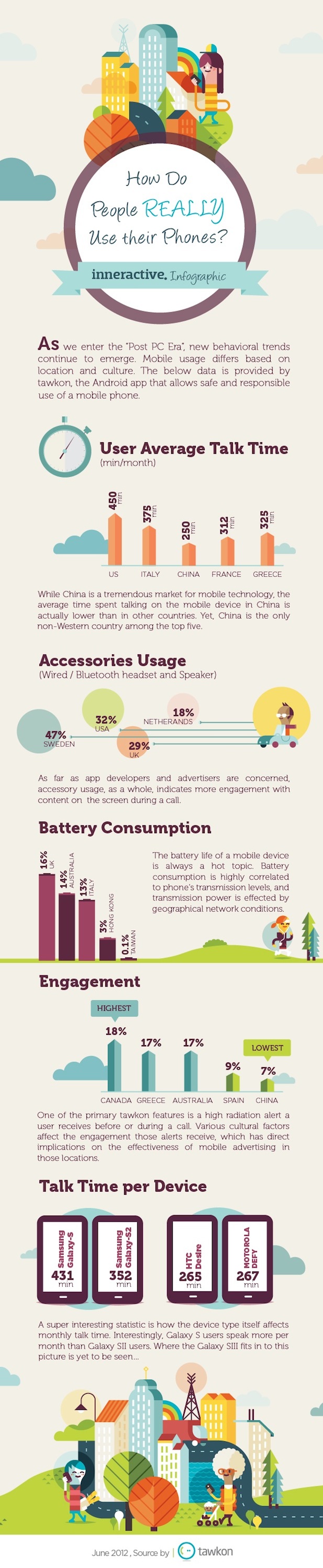
Recently Tawkon released some interesting data on how people really use their Android smartphones. Results show that if you are from the US and own a Samsung Galaxy S, chances are high that you talk a lot on your phone. If you are a Swede, you’re likely to record a pretty high accessory usage; meaning that you are a heavy bluetooth user. On the other hand, if you’re from Taiwan, you are your Android battery’s best friend, as you tend to set value on saving energy.


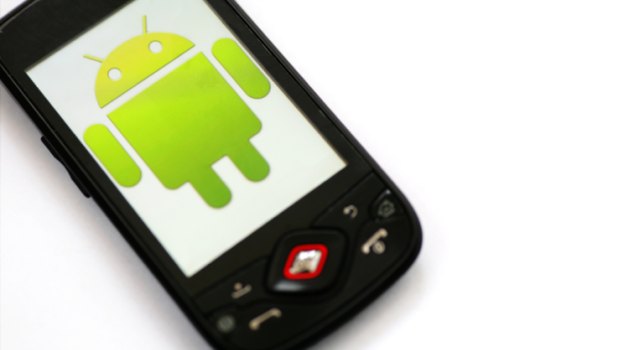
Android smartphone


Basically, the usage of Android smartphones depends strongly on your culture and location. Can you identify with the outcomes of this observation? Take a look at the infographic below.


How People Really Use Their Android Smartphones

How People Really Use Their Android Smartphones


June 13, 2012

How Smartphones Change the Way We Live

Posted in Just for fun by Lisa Leitner

Do you know the feeling when you go out and realize you left your phone at home? Some might run scared others are completely lost – I think we can sum it up: it’s not very enjoyable. Smartphones have become a vital part of our lives and without them we feel like only half a person.
Smartphones change the way we communicate, gather information, behave, feel and use other technologies

Most of us use their smartphone every day, to surf the internet and social media platforms, check emails, manage calendars, listen to music, play games, watch videos, take photos, read the news, write text messages and also, every now and then we use them for their original purpose, to make phone calls. Now all these activities can be done using one single device. If you think back some 25 years ago, some of them were not even possible. Consequently, smartphones have changed the way we live quite drastically.


How Smartphones Change the Way We Consume Information and Communicate

The way we consume information has changed from talking to each other to reading the newspaper to watching television, to gathering info on the web using a computer and now a smartphone. Today we can access any kind of information 24/7, wherever we are. That’s both, convenient and overwhelming. Same is true for communication. Our smartphone offers us several ways of communication: calls, text messaging, instant messaging, email, social media, blogs, etc.

The fact that we can get any information anytime we want has quite an impact on our way of living. A recent study by Columbia University found that we are very likely to forget information which we know we can easily retrieve again. Also, when we are asked questions, we tend think about how we can find the answer on the internet rather than thinking about the actual question and answering it ourselves. Basically, we’re getting lazier, because we know that we can access all kinds of information anytime.


How Smartphones Change the Way We Behave and Feel

It starts early in the morning. The first thing we do is reaching for our smartphone to turn off the alarm clock. As the day goes by we use our smartphone on the way to work, during mealtimes, at work, on the way home, in the bathroom and in bed. The smartphone has made us more sociable, or is it the other way around?

We are constantly connected and expected to have a mobile phone with us at all times. Of course, that’s convenient, but being available 24/7 is tiring, it’s a blessing and a curse. “Sorry, I wasn’t at home” has worked as an excuse 20 years ago. Today it’s like you never leave the office.


How Smartphones Change the Way We Use Technology

Our society tends to use devices that make our lives easier and more convenient. Taking this fact into account the mobile industry developed one device that made several others obsolete. Sales dropped for landline phones, desktop computers, digital cameras, mp3 players, gps devices, etc. Not too long ago there was a time, when you needed to carry all those things with you.

The desktop computer used to be the most irreplaceable tech piece in our lives, but during the last months the smartphone has taken its place. We still like to use desktop computers to handle practical tasks, while we prefer our smartphone to handle emotional ones.


Our smartphone is our personal assistant that helps us mastering our everyday life. I wouldn’t wanna live without it anymore, would you? I’d love to read your opinion in the comments!


Finally, have a look at this infographic about how phones influence our family lives:
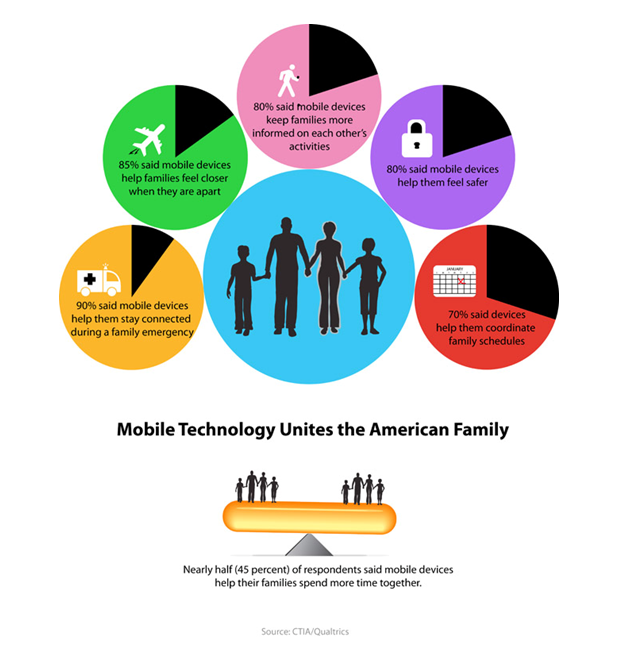
How smartphones change our family lives

Source: CTIA/Qualtrics

May 25, 2012

Mobile Phones Now and Then – a Little History Lesson

Posted in Just for fun, mobile news by Lisa Leitner

The mobile phone has accompanied us for about 30 years now. Within the last decades it has evolved from a means of simple communication to a personal assistant who facilitates our everyday life. Today, we can’t imagine a world without our beloved cell phones, let alone mobile internet, apps, built-in cameras and mp3-players.

Just a couple of days ago my 7-year-old nephew asked me: “What did you do with your iPhone before there was internet?” That’s when I decided to go back in time and tell a little history about the evolution of mobile phones. So read along, whether you are 7 and want to know where the iPhone comes from or you are 25+ and can still remember a time without apps and all the bells and whistles.

Evolution of mobile phones

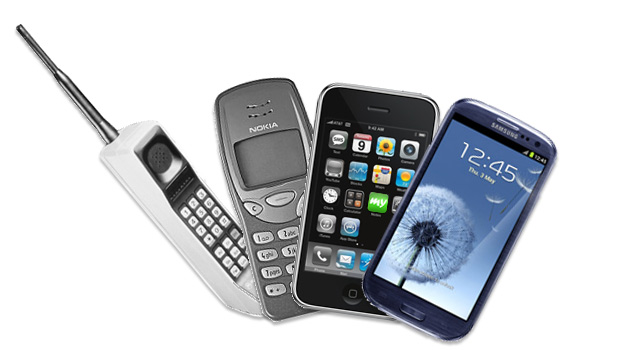
Mobile phones now and then

1980s –the first generation of mobile phones

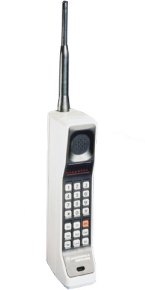
The early 1980s brought us the first generation of mobile phones. Believe it or not, back then the only purpose of the mobile phone was to make phone calls. This is how a cell phone looked some 30 years ago:


Motorola DynaTAC 8000X

Motorola DynaTAC 8000X

Here are some key facts of the Motorola DynaTAC 8000x:
Talk time: 1 hour
Standby time: 8 hours
Display: red LED
Memory: you were able to save 30 phone numbers
Weight: 790 g (28 oz)
Size: 250 mm long (10 in)
Input: 21 keys

Not very surprising, this phone was also called “The Brick”. Nowadays it may seem as if Motorola didn’t have any appreciation for design, however, the brick was considered revolutionary back then.

1990s –the rise of Nokia

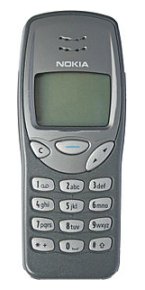
In the 1990s mobile phones started to look very differently to their predecessors, following a trend to build tiny 100 – 200 g (3.5 – 7 oz) devices. There’s one handset many of you will remember from that time: the Nokia 3210.

Nokia 3210

Nokia 3210

Key facts of the Nokia 3210:
Talk time: 3 – 4.5 hours
Standby time: 55 – 260 hours
Display: backlit monochrome
Memory: 250 names in phonebook
Weight: 153 g (5.4 oz)
Size: 123.8 mm x 50.5 mm x 16.7 – 22.5 mm (4.9 in x 2 in x 0.6 – 0.9 in)
Input: 15 keys

Some changes are pretty obvious –size and weight shrunk enormously, it got a real display, fewer keys and battery lives improved. Also, mobile phones got some cutting-edge features, like an internal antenna, mobile games (Snake!) and SMS messaging. With its killer features the Nokia 3210 became one of the most popular mobile phones in history.

2000s – the smartphone revolution

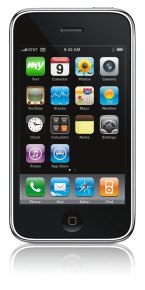
The trend of making cell phones tinier and tinier lasted until the mid 2000s. Holding a teeny Sony Ericsson Z525a in 2006 I was making fun of huge phones, not knowing trend was about to teach me a lesson. A major event in the history of mobile phones lead to a fundamental change in size and look of devices: the launch of the first iPhone in 2007.


iPhone 2G

iPhone 2G

Key facts of the iPhone 2G:
Talk time: 8 hours
Standby time: 250 hours (that’s what Apple says)
Display: 3.5 in (88.9 mm) screen, 320 x 480 pixel resolution, multi-touch display, 18-bit LCD
Memory: 128 MB eDRAM
Storage capacity: 8 or 16 GB flash memory
Weight: 135 g (4.8 oz)
Size: 115 mm x 61 mm x 11.6 mm (4.5 in x 2.4 in x 0.5 in)
Input: 1 key, touchscreen
Connectivity: WiFi, Bluetooth
Rear camera: 2 megapixel

The release of the iPhone 2G was the start of the smartphone revolution. Apart from making phone calls and sending text messages, smartphones seemed to have nothing in common with mobile phones from the 1990s. The mobile phone of the late 2000s was a mini-computer, with which you could surf the internet and make use of apps. Furthermore it replaced your camera, your calendar, your mp3-player and your remote control. Suddenly all the other handset manufacturers started to build smartphones and the devices got bigger and bigger.

Mobile phones today

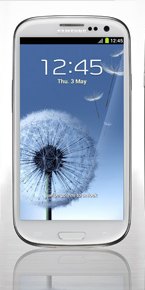
Today it gets harder and harder to tell cell phones and tablet computers apart. The newest member of the smartphone family is the Samsung Galaxy S III, announced on May 3rd in London.

Samsung Galaxy S III

Samsung Galaxy S III

Key facts of the Samsung Galaxy S III:
Talk time: 6 – 10 hours
Standby time: 24 – 50 hours (way more realistic than Apple’s 250 hours)
Display: 4.8 in (120 mm) screen, Super AMOLED, 1280×720 pixles, multi-touch, proximity sensor, scratch resistant glass
Memory: 1 GB RAM
Storage capacity: 16/32/64 GB flash memory
Weight: 133 g (4.7 oz)
Size: 136.6 mm x 70.6 mm x 8.6 mm (5.4 in x 2.8 in x 0.34 in)
Input: 1 key, touchscreen, voice recognition
Connectivity: WiFi, Bluetooth, 4G, NFC
Rear camera: 8 megapixel
Front camera: 1.9 megapixel

Obviously, over the years design and usability have become very important to the mobile industry. Technical improvements are impressive. Pictures you take with your new Samsung Galaxy S III are of a higher quality than those you took with your Canon Ixus a few years ago. Also, the performance of today’s mobile phones is stronger than those of computers we used a decade ago. The only real disadvantage that’s involved is the poor battery life. So there’s still room for improvement.


Anyway, it’s for sure that the evolution of mobile phones has turned out pretty great so far. Our smartphones are great assistants, who we can even talk to now. So all that’s left to say is: A world without a mobile phone is possible, but pointless 😉

February 24, 2012

Hello World!

Posted in mobile news, mysms news by mysms

Hallo! Salut! Hola! Ciao! Olá! Hej! Hello…and welcome to our mysms blog!

We’re very happy to announce the birth of the youngest of our mysms family: the mysms blog! Bringing this blog into being we’d like to establish a platform where you can interact with us, share your thoughts and opinions and stay informed about happenings in the mobile world.


Contents of our mysms blog will include the topics messaging, cloud services and facts & figures about the mobile, smartphone & tablet market. Also we will share our latest mysms news with you – covering product updates, new features as well as quick peeps behind the scenes.


In order to never miss out on a blogpost (written mainly by Angela, Elfriede and Lisa) we recommend you subscribe to our newsletter, friend us on Facebook, follow us on Twitter and circle us on Google+.


In this spirit, we hope you enjoy our mysms blog – anywhere, anytime and on any device ; )


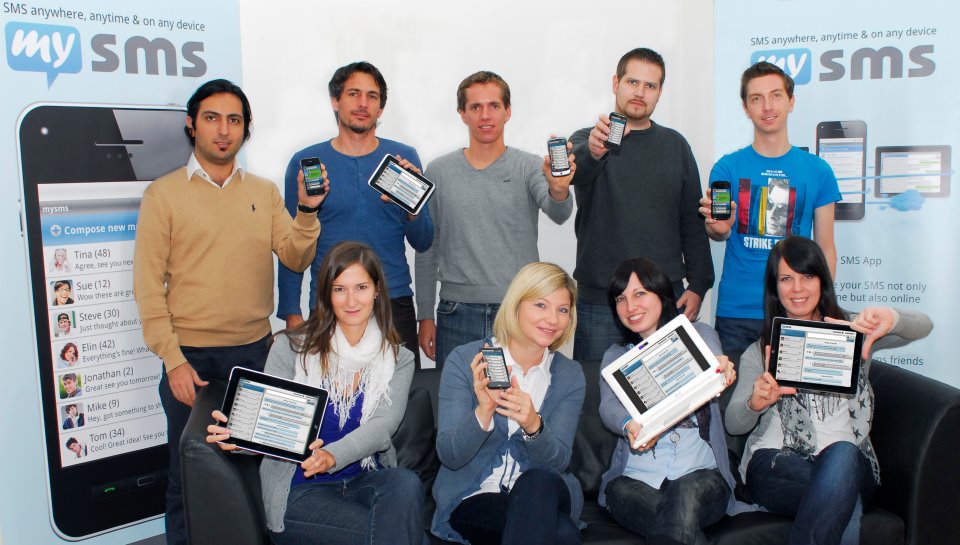
mysms team

mysms team welcomes you on our blog